
Behind the Walls: What You Should Know About Electrical Planning
When planning a renovation, electrical decisions often happen quietly in the background—until something doesn’t work the way you hoped. Too few outlets. Lighting that feels harsh instead of layered. A panel that can’t support the way you actually live.
To help demystify what truly matters (and what’s often overlooked), we sat down with our trusted electrical partners Pat and Ami from Blais Electric, for a candid Q&A. It’s practical, honest and highlights how much thought goes into good electrical planning.
We asked them what adds long-term comfort and value, what homeowners commonly underestimate, and how early collaboration can prevent costly compromises later on. Consider this a behind-the-scenes look at the decisions that quietly shape a home that works beautifully—now and in the years ahead.
Question: Can you tell us what electrical upgrades add long-term value or comfort to a home?
Answer:
Ban the "Boob Light": Replace single, center-room flush mounts that create harsh shadows. A proper lighting design uses layers (recessed lights plus decorative fixtures) to make a room feel larger and more inviting.
Service & Panel Upgrades: The unsexy but necessary "heart" of the home. You can’t run a modern kitchen or A/C on a 60-amp service.
Wiring Safety: Removing aluminum wiring, knob-and-tube, or ungrounded circuits is essential for insurance and safety.
EV Readiness: Even if you don’t have the car yet, roughing in the conduit or wire now increases resale value immediately.
Heated Floors: The ultimate comfort upgrade for bathrooms and basements.
Question: What do homeowners often overlook in early electrical planning?
Answer:
The "Iceberg" of Costs: Homeowners see a $5 switch; they don't see the labor, wire fishing, code compliance, materials, and the years of skilled expertise required to make that switch work safely.
The "Unsexy" Spend: It is painful to spend a significant chunk of your budget on a service upgrade or panel change—a grey metal box in the basement—rather than the "fun" stuff like quartz counters or heated towel rails. But without that heavy lifting behind the scenes, the pretty stuff simply won't work.
The Mess: Electrical is invasive. Moving a device often means cutting drywall, which means dust, patching, and painting.
The "LEC" Requirement: A General Contractor cannot legally do electrical work. It requires a Licensed Electrical Contractor (LEC).
Future-Proofing: If you are upgrading the panel, think 10 years ahead. Planning a basement rental or ADU? Split the meter now so tenants pay their own hydro later.


Question: How does early collaboration with trades prevent design compromises later?
Answer:
The "Change Order" Premium: Once a job is quoted and scheduled, anything outside that scope is an "extra." Extras are never cheap. Often, that same work could have been done much more efficiently (and affordably) if it had been part of the initial plan.
Budget Reality Checks: We can tell you immediately if a design idea violates code or will cost triple what you expect before you fall in love with it.
Feasibility: It stops the "we can do that, but it’s going to cost you" conversation from happening after the framing is already done.
Question: What details define a truly refined electrical layout?
Answer:
Architectural Alignment: A refined layout doesn't just dump pot lights in a grid. We align lighting with architectural features—centring them on millwork, islands, or art walls. We need exact dimensions (e.g., distance off the wall) to ensure the light "washes" the wall rather than creating harsh scallops or shadows.
Total Spec Integration: We can’t guess. We need the "cut sheets" (specs) for every appliance, HVAC unit, and cabinet. A refined job places the outlet exactly where the specific appliance allows (e.g., recessed into a niche for a flush-mount fridge), rather than a generic "behind the unit" placement that ruins the fit.
The "Clouded" Revision: This is the mark of a professional site. We need ONE final, dated plan. If you change the drawing, the revision must be "clouded" (highlighted/circled). Sending a new plan without clearly marking changes leads to missed scope, quoting errors, and mistakes on site.
Visual Quiet: Receptacles should be located to minimize visual noise. This means planning outlets inside appliance garages, floor outlets for floating sofas, or in-drawer outlets for bathroom vanities so cords are never draped across surfaces.
Question: Now a personal one! If you were renovating your own home, as a licensed electrician, what’s one electrical feature that would be a must for you?
Answer:
Intuitive Lighting Control: Proper switching is an art. You should never have to walk into a dark room to find a switch, and you should never have to backtrack to turn lights off. The flow of the switches must match the flow of your feet.
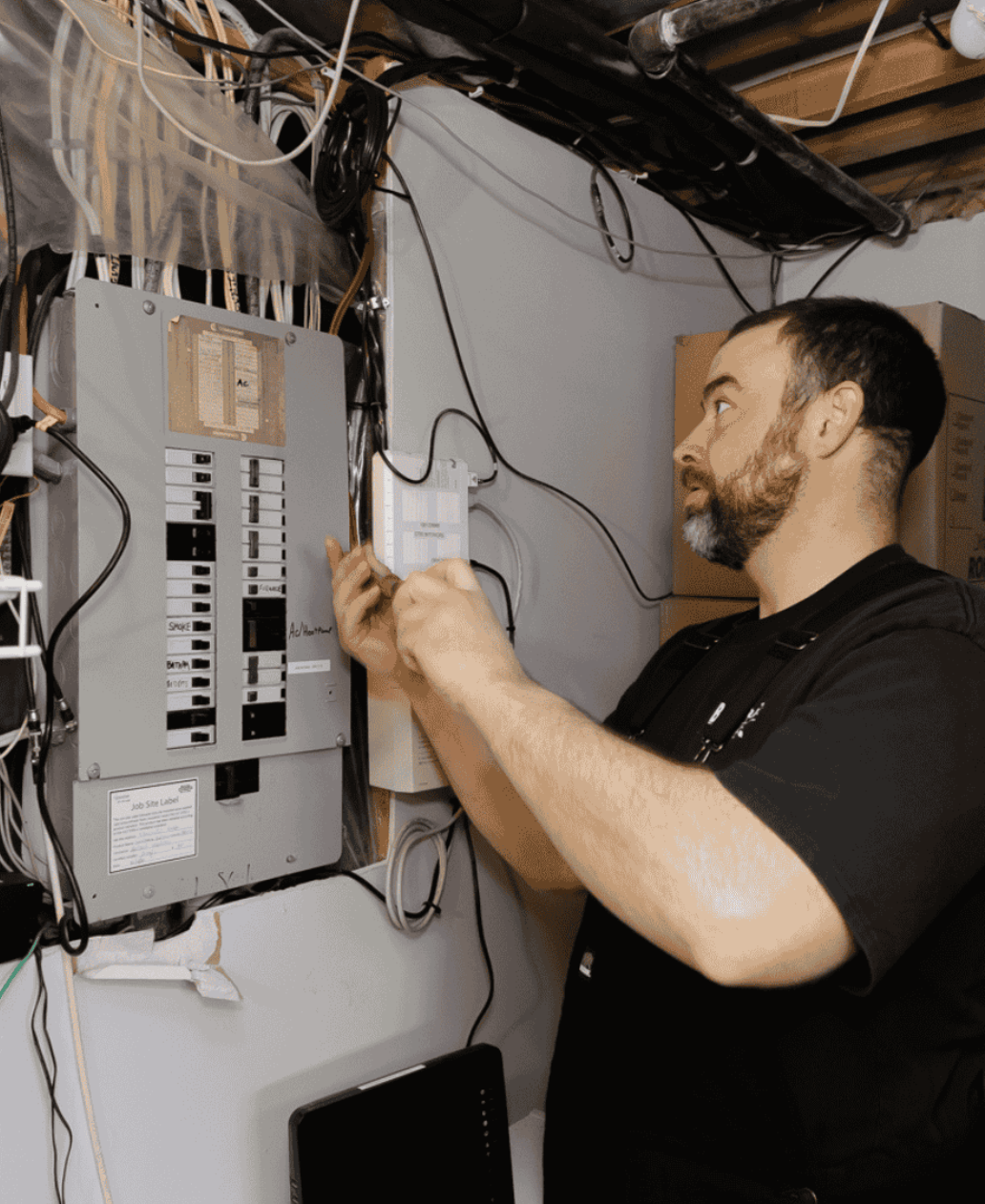
Images by: Blais Electric
There you have it! A well-planned electrical layout isn’t about excess—it’s about intention. When lighting, power, and controls are thoughtfully considered from the start, a home simply feels easier to live in. Nothing feels like an afterthought, and nothing needs to be worked around later. Big thanks to Blais Electric, who we consider the best electricians in Guelph, for their time in answering some of our questions together.
If you’re considering a renovation, we hope this conversation encourages you to think early about the systems that support your daily life—not just the finishes that catch the eye. Bringing the right trades into the conversation at the right time allows for smarter decisions, fewer surprises, and a more cohesive result overall.
If you’re in the early planning stages and would like guidance on how to approach your renovation holistically, Book a Discovery Call - we’re always happy to help you navigate the process and assemble the right team from the outset.